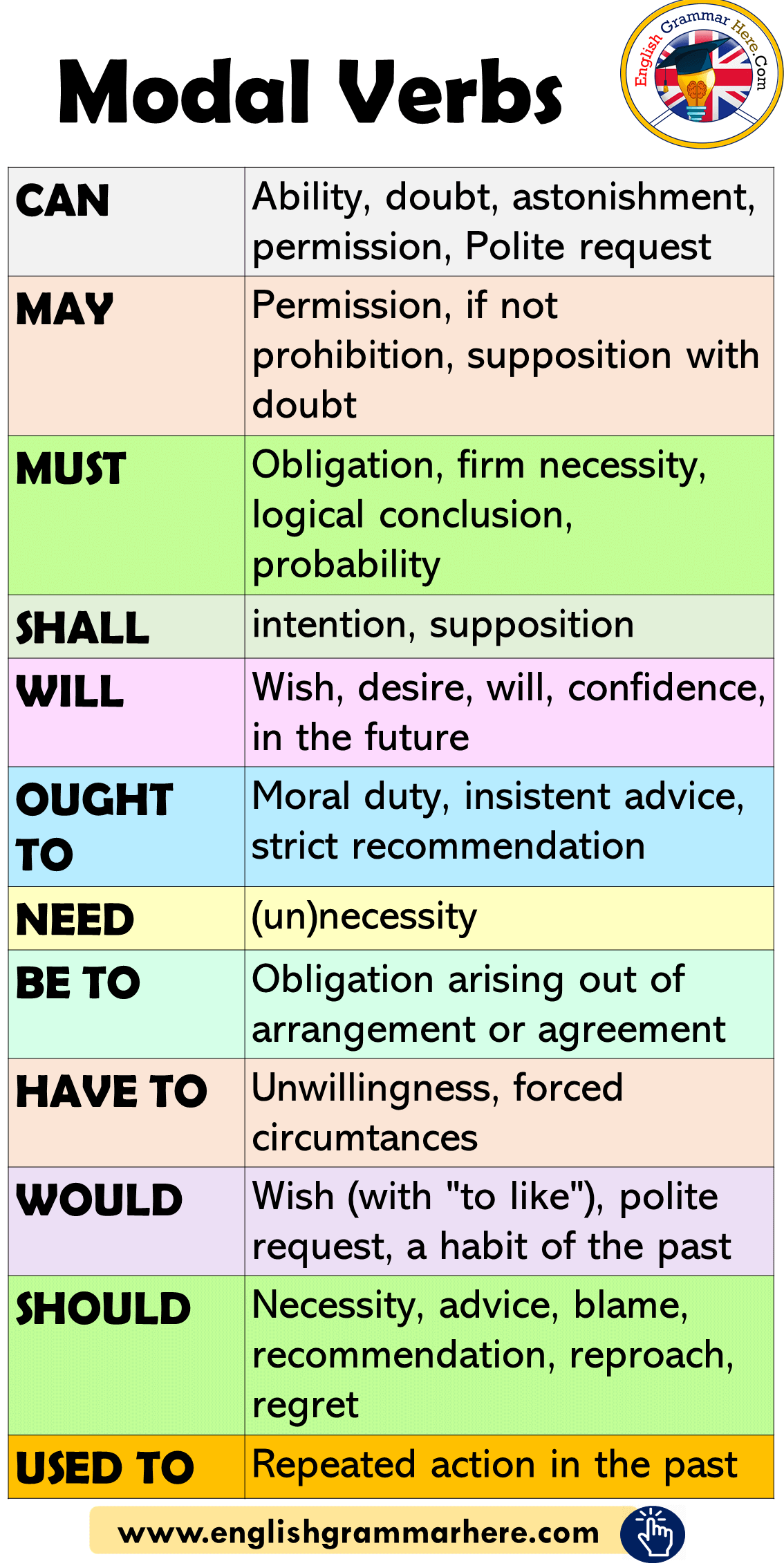
model chart english grammar. Modal verbs show possibility, intent, ability, or necessity. Since they are auxiliary verbs (or the helping verbs), these are utilized in combination with the statement's main verb.

model chart english grammar Modal verbs are auxiliary verbs (also known as helping verbs). Common examples of modal verbs include can, should, and must. Shall i carry your bag?



Modal Verbs Show Possibility, Intent, Ability, Or Necessity.
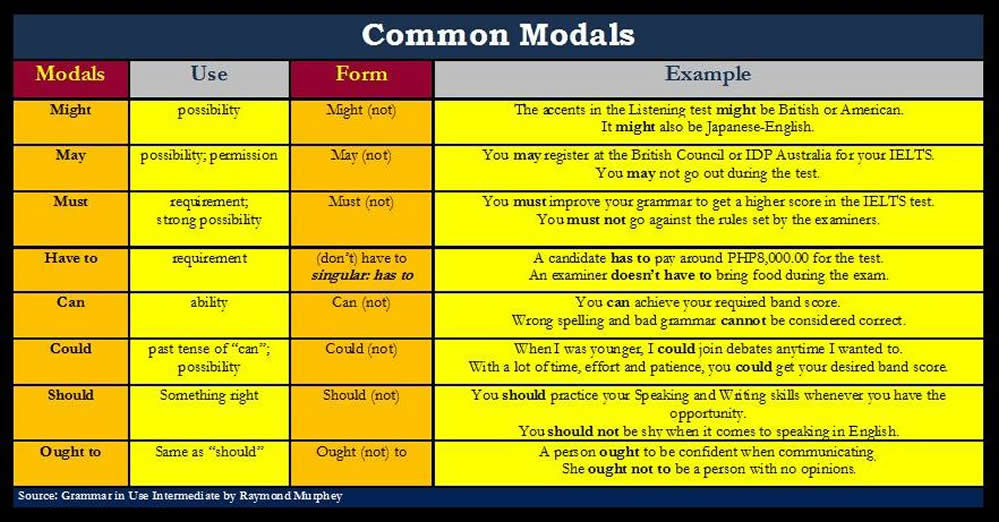
Modal verbs express potential, intent, capacity, or necessity. Modal verbs are helping verbs that are used along with main verbs to represent the ability, possibility and probability of a subject to do an action and emphasise the necessity of an. You should drive carefully in bad weather.
Modals / Modal Verbs Express Degree Of Necessity, Advisability And Certainty.
Common examples of modal verbs include can, should, and must. In english, modal verbs are a small class of auxiliary verbs used to express ability, permission, obligation, prohibition, probability, possibility, or advice. Used instead of will in the 1st person.
Because They’re A Type Of Auxiliary Verb (Helper Verb),.
Since they are auxiliary verbs (or the helping verbs), these are utilized in combination with the statement's main verb. You should switch off the light when. Shall i carry your bag?
Modal Verbs Are Auxiliary Verbs (Also Known As Helping Verbs).
Normally modal verbs cannot work alone and must work with the main verb. Mustn't vs don't have to.